

“Artificial intelligence, which is often hailed as a tool for progress and development, can, in the absence of oversight, become a new weapon to suppress fundamental rights. In camps such as Tindouf, where a legal vacuum prevails, residents are exposed to digital surveillance and systematic oppression. Our participation in this event reflects the commitment of the Nubian Center for Peace and Democracy to defending freedom and human dignity, exposing violations, strengthening the rule of law, and protecting the most vulnerable.”
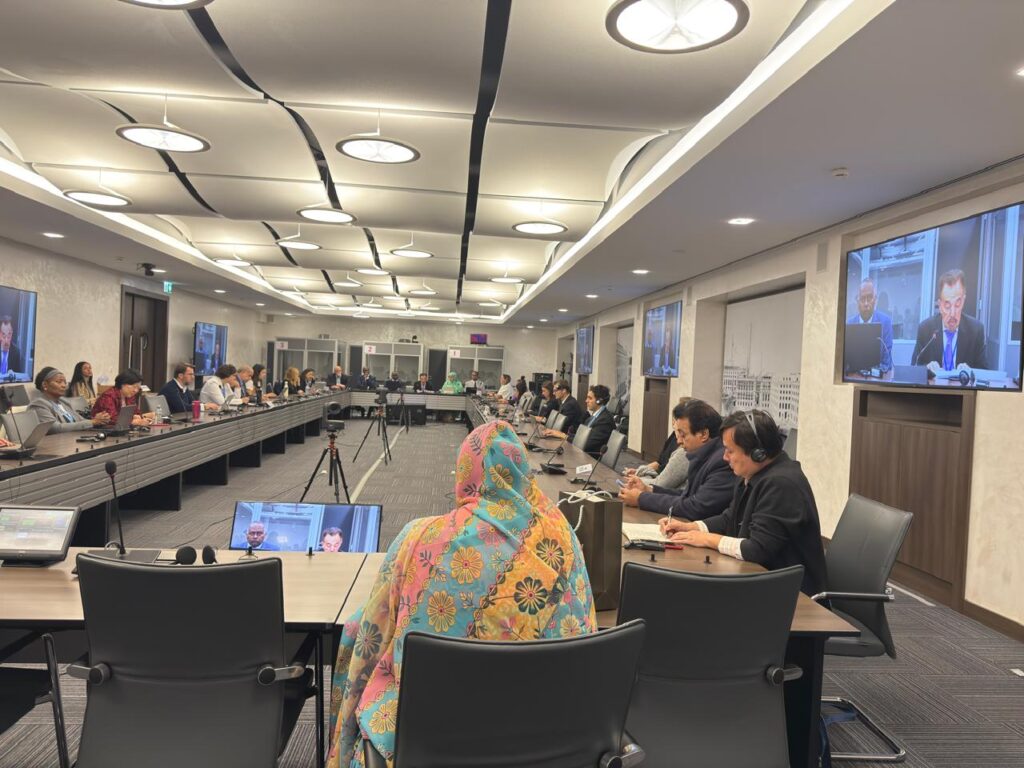
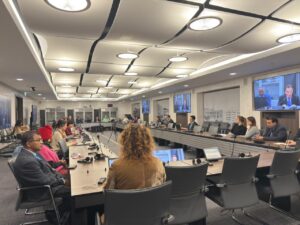
On October 1, 2025, a high-level side event was held at the Palais des Nations in Geneva on the sidelines of the 60th session of the Human Rights Council. The event brought together leading human rights experts, academics, journalists, and representatives of non-governmental organizations to discuss the escalating risks posed by artificial intelligence to human rights, particularly in areas lacking effective law enforcement and oversight.
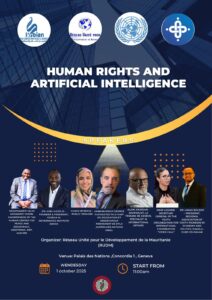
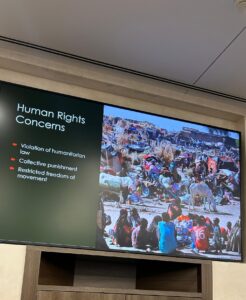
The event, organized by the “Unity Network for the Development of Mauritania,” highlighted Tindouf camps as a stark example of environments where artificial intelligence could shift from a development tool to a means of deepening isolation and oppression. Participants warned that regulatory gaps surrounding the use of modern technology, especially AI, create opportunities for systematic human rights violations targeting the most vulnerable groups, including women, youth, and displaced persons.
Dr. Mohamed Saleh Mohamed Yassin, Chairperson of the Nubian Center for Peace and Democracy, participated in the discussion, emphasizing the political dimensions of the issue and warning against the increasing use of algorithmic surveillance technologies as tools of social control and suppression of dissenting voices. Yassin highlighted that such digital monitoring threatens not only individual rights but also democratic processes, exacerbating the suffering of civilians trapped in environments devoid of law and accountability.
Dr. Axel Mazullo, President of the Geneva Institute for AI Governance, warned that the absence of global legal and regulatory frameworks creates fertile ground for automating human rights violations. He noted that areas like Tindouf camps are among the most dangerous, as armed groups operate outside any accountability framework, leaving residents vulnerable to digital control with no means of redress.
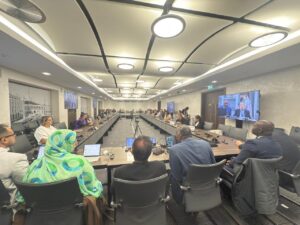
George Papadatos, representative of the European Public Law Organization, pointed out that tools like “predictive justice,” which rely on algorithms to anticipate criminal behavior, can, in the absence of judicial oversight, become instruments of stereotyping and systematic persecution, undermining fundamental principles of justice and increasing violations against the most vulnerable.
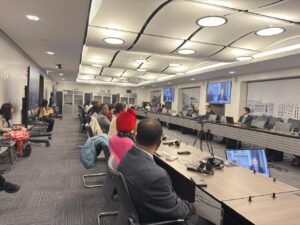
Dr. Imam Bousif, President of the Regional Association of Young Pioneers in Economy and Politics, focused on the devastating impact of these technologies on youth, explaining how algorithm-generated “information bubbles” can lead to systematic “algorithmic indoctrination,” isolating young people from the outside world and making them easy prey for extremism and totalitarian ideologies.
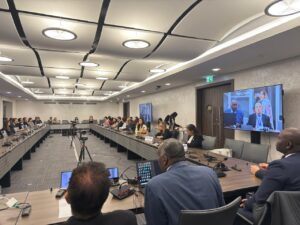
Journalists also highlighted media-related risks. Alan Jordan of La Tribune de Genève emphasized the importance of transparency and free access to information, warning against public manipulation through “manufactured facts” generated by AI, particularly in closed environments like Tindouf camps.
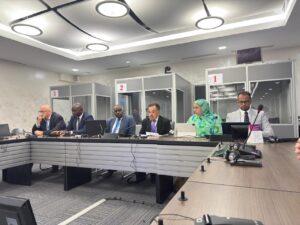
The event concluded with an urgent joint call to the international community to establish a binding global regulatory framework for AI based on human rights and to hold states and major tech companies accountable for their legal and ethical responsibilities. Participants also stressed the urgent and unconditional access of UN agencies and independent humanitarian organizations to Tindouf camps to assess conditions and provide protection for residents.
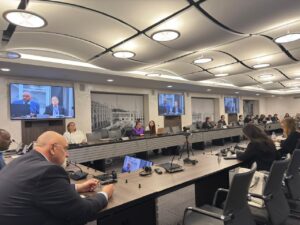
The participants confirmed that the event succeeded in bringing the human rights situation in Tindouf camps back to the center of international attention, amid growing concerns that modern technology could become the latest tool used by armed groups to suppress populations. The participation of the Nubian Center for Peace and Democracy came as a joint effort to support civil society initiatives in exposing violations and defending fundamental rights and human dignity in the most vulnerable areas.